In a dramatic escalation of his administration's maximum pressure campaign, President Donald Trump has ordered a sweeping Strait of Hormuz blockade. The decisive military action follows the weekend's high-profile Iran peace talks collapse in Islamabad. As U.S. Central Command moves to lock down Iranian ports, the global fallout has been instantaneous, triggering major oil price surge news. Meanwhile, the administration faces mounting domestic pressure, executing this massive overseas operation while the federal government navigates DHS shutdown day 58.
Iran Peace Talks Collapse After Marathon Session
Vice President JD Vance led the American delegation through a grueling 21-hour negotiation in Pakistan, marking the highest-level direct engagement between Washington and Tehran since 1979. However, the diplomatic effort to ease Middle East tensions 2026 hit a definitive wall by Sunday morning.
American negotiators established strict red lines for any lasting agreement. The U.S. delegation demanded:
- An immediate and permanent halt to all uranium enrichment programs.
- The complete dismantlement of major nuclear facilities across the country.
- The uninhibited, toll-free reopening of the strategic waterways for all international commercial shipping.
Iranian officials categorically rejected these conditions. The sticking point largely centered on Tehran's insistence on its sovereign right to enrich uranium, an issue that has divided the two capitals for decades. Instead, Tehran issued its own stringent requirements, which included the release of $6 billion in frozen assets and an end to allied military operations against Hezbollah.
Vice President Vance informed reporters before departing that Tehran had simply chosen not to accept American terms, emphasizing that the failure of the talks would have far worse economic consequences for Iran than for the United States. The abrupt end to diplomacy leaves the fragile two-week ceasefire in serious jeopardy.
Trump Iran Foreign Policy Triggers Naval Action
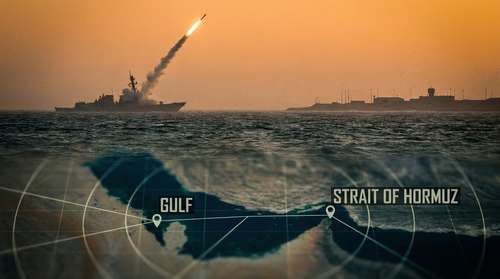
The diplomatic failure in Pakistan prompted an immediate, aggressive shift in Trump Iran foreign policy. Bypassing further negotiations, President Trump took to social media to announce that the U.S. Navy would begin blockading ships trying to enter or leave the waterway. The US naval blockade 2026 officially commenced at 10:00 a.m. EDT on Monday under the operational control of U.S. Central Command.
Targeting Iranian Revenue Streams
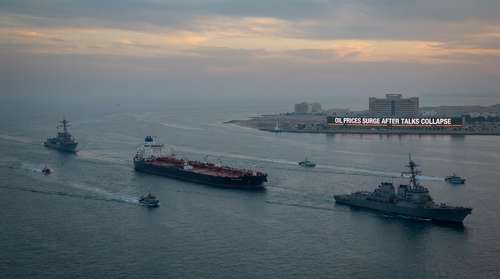
Enforced by American destroyers, the blockade impartially targets vessels of all nations attempting to dock at or depart from Iranian coastal areas. Ships transiting to non-Iranian ports remain officially exempt from the interdiction. The strategy aims to sever Iran's energy export revenue, a move former Treasury officials estimate will cost Tehran roughly $435 million daily.
President Trump also issued a stark warning to the Iranian military, stating that any hostile vessels interfering with the naval operation will face total destruction. He added that the U.S. military is simultaneously working to clear maritime mines previously laid by Iranian forces. Despite the President's claims of broad international backing, traditional allies remain hesitant. British Prime Minister Keir Starmer has explicitly stated the U.K. will not participate in the blockade, citing a desire to avoid being dragged further into the regional conflict.
Global Markets React with Oil Price Surge News
The strategic waterway historically handles nearly 20% of the world's commercial oil shipments, making any disruption a catalyst for global market volatility. The military maneuver immediately generated oil price surge news across international financial sectors.
Brent crude, the international benchmark, spiked to $101.88 per barrel, while U.S. crude benchmarks reached $104.69 by Monday afternoon. Energy analysts caution that if the standoff prolongs and alternative transit routes face Houthi or Iranian reprisals, barrel prices could rapidly exceed $110.
While the administration argues the blockade is a necessary step to establish a safe, toll-free route for commercial shipping, the immediate reality is a tightening economic stranglehold. With roughly 100 tankers having transited the strait in recent weeks—many carrying Iranian oil to Asian markets—the sudden cut-off threatens to upend delicate global supply chains.
Crisis at Home Marks DHS Shutdown Day 58
The massive deployment of naval assets arrives against the backdrop of an unprecedented domestic funding crisis. The federal government has now entered DHS shutdown day 58, the longest consecutive lapse in funding for the agency in American history. The jarring contrast of projecting military dominance abroad while domestic security agencies scramble for operational funds has drawn sharp criticism from congressional watchdogs.
Despite the lack of congressional appropriations, Homeland Security Secretary Markwayne Mullin issued strict directives ordering all furloughed employees back to their posts. While President Trump previously signed emergency executive orders to ensure back pay for Transportation Security Administration agents and Coast Guard personnel, critical preparedness grants and non-disaster programs remain entirely frozen. The national callout rate among TSA officers had peaked earlier in the shutdown, causing massive disruptions at major airports before the emergency pay orders stabilized the workforce.
Congressional Roadblocks and Next Steps
The operational strain is showing across domestic programs. FEMA's Disaster Relief Fund continues to dwindle, currently sitting at $3.6 billion, raising alarms among emergency managers monitoring domestic vulnerabilities. As Congress returns from recess this week, the House is expected to push a budget reconciliation effort to secure multi-year funding for Immigration and Customs Enforcement and Customs and Border Protection. Whether this legislative strategy can successfully break the two-month stalemate remains uncertain as global tensions continue to dominate the administration's bandwidth.