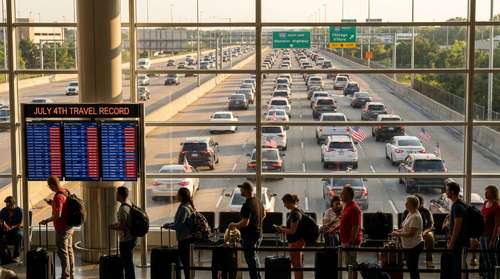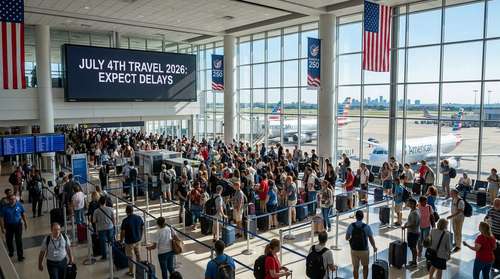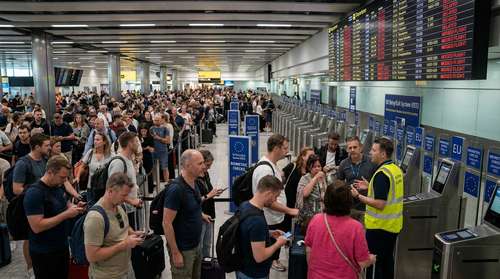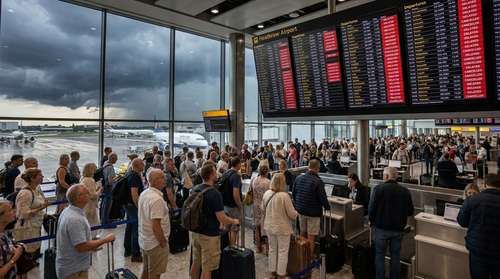
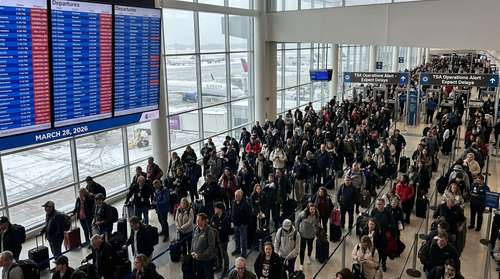
The perfect storm has officially grounded vacation plans for millions of Americans this Palm Sunday weekend. Unprecedented Spring Break travel delays 2026 have escalated into a nationwide nightmare, with over 4,400 flight disruptions recorded by midday. A chaotic combination of critical TSA staffing shortages tied to the partial Department of Homeland Security (DHS) shutdown, record passenger volumes, and a brutal late-season Northeast storm has triggered what industry experts are already calling the defining US aviation crisis 2026. If you are heading to the airport today, prepare for significant hurdles before you even reach the departure gate. The convergence of political gridlock and severe weather is testing the limits of an already strained travel infrastructure.
Staffing Shortages and TSA Government Shutdown Airport Lines
At the heart of today's massive disruption is a severely strained security infrastructure. Over the past few weeks, the ongoing DHS funding lapse has led to staggering attrition. According to federal sources, more than 510 TSA officers have resigned nationwide since the shutdown began. Those who remained on the job have faced record-breaking passenger volumes with minimal support, leading to infamous TSA government shutdown airport lines that stretch through terminals, snake around baggage claims, and often extend out the doors into the drop-off zones.
To address the growing national emergency, President Trump signed the highly anticipated TSA executive order 2026 late Friday. The directive explicitly instructs homeland security and budget officials to utilize available funds to finally compensate TSA employees who have been working without paychecks. While the executive order is a meaningful and celebrated step to stop the operational bleeding, relief on the ground is not immediate. Security checkpoints cannot instantly replace the hundreds of experienced officers who have already walked away. Consequently, travelers are still facing grueling domestic wait times of up to three hours at major hubs.
Northeast Freezing Weather Worsens Flight Cancellations March 28
While Washington attempts to resolve the staffing gridlock, Mother Nature has delivered a devastating secondary blow. A fierce, freezing late-March storm system has battered the Northeast corridor, triggering FAA ground stops and drastically compounding the broader staffing crisis. The sheer volume of flight cancellations March 28 has overwhelmed airline rebooking systems and left thousands of vacationers stranded on terminal floors from Boston to Washington, D.C.
Travelers desperately checking the LaGuardia airport flight status this morning were met with a frustrating sea of red. Icing conditions and low cloud ceilings have slashed arrival rates at LGA, JFK, and Newark, effectively bottlenecking the entire eastern seaboard's airspace. Because vital aircraft and flight crews are stuck de-icing in New York and Boston, the ripple effects are delaying scheduled departures in Florida, Texas, and California. The domino effect is catastrophic for a weekend typically defined by seamless transitions to sunny destinations.
A System Pushed to the Brink
When a major metropolitan region goes offline, the highly interconnected nature of the American aviation network means no local airport is completely safe from the fallout. Planes meant to fly from Orlando back to Chicago are currently grounded on tarmacs in New York, leaving eager Spring Break families waiting for aircraft that simply aren't coming today.
Network Meltdowns: Southwest Airlines Delays Today
The combination of security bottlenecks and severe weather has pushed airline operational metrics into the red zone. Southwest Airlines delays today have become a major focal point of the crisis, as the carrier's highly efficient point-to-point routing model leaves it uniquely vulnerable to cascading weather disruptions. Unlike the traditional hub-and-spoke models utilized by legacy competitors, a single delayed Southwest flight in New York can instantly disrupt a subsequent itinerary in Denver, Phoenix, or Las Vegas.
Airline representatives are actively urging passengers to manage their expectations and avoid heading to the airport if their flight is already flagged. Call center wait times have surged past the four-hour mark, and mobile app servers for several major airlines have experienced intermittent crashes due to the unprecedented volume of frantic users attempting to rebook their ruined vacations.
How to Navigate the US Aviation Crisis 2026
If your travel plans fall within the next 48 hours, a proactive strategy is absolutely essential. The standard travel advice of arriving two hours early is no longer sufficient; aviation experts now recommend allocating a minimum of three hours for domestic departures at affected hubs.
- Monitor Checkpoint Times: Download and monitor the MyTSA app to check real-time line estimates before you leave your driveway.
- Leverage PreCheck: While TSA PreCheck lanes are generally moving much faster than standard queues, they are not completely immune to the staffing slowdowns. Expect wait times here to be elevated as well.
- Skip the Kiosk: Utilize mobile boarding passes and travel strictly with a carry-on bag if possible to eliminate one major friction point from your journey.
Patience will be your most valuable asset this weekend. Ensure your airline apps are updated, turn on push notifications, and prepare for a very long day at the airport.