The global economy is facing a severe reality check as the oil price surge 2026 sends shockwaves through financial markets and neighborhood gas stations alike. Fueled by a rapidly escalating war in the Middle East, energy markets are experiencing unprecedented turmoil. As the fallout spreads from the trading floor to the broader economy, Federal Reserve Chair Jerome Powell delivered a sobering message on Monday at Harvard University: the central bank is effectively hitting pause on any upcoming monetary easing.
The Strait of Hormuz Energy Crisis and Crude's Historic Climb
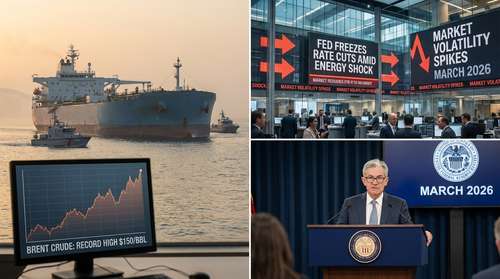
At the center of this economic tempest is the Strait of Hormuz energy crisis. Following intense military actions and retaliatory closures of the vital maritime chokepoint, international oil markets have lost access to millions of barrels of daily production. As a direct result, traders watched a staggering Brent crude record high for monthly gains materialize in real time.
Brent crude recently soared past $114 per barrel—touching nearly $117 during intraday trading—marking a catastrophic 54% gain for the month of March. This shatters previous records, surpassing even the panic-buying spikes seen during the 1990 Gulf War. The US Iran conflict economic impact is no longer just a theoretical risk modeled by analysts; it is actively rewriting the rules for global supply chains. With Wall Street pricing in a permanent war premium, energy experts caution that a prolonged blockade could drive crude toward the $150 mark by summer, dramatically increasing the odds of a global recession.
Jerome Powell's Harvard Address: The Fed Interest Rate Forecast 2026
The swiftness of the oil price surge 2026 has abruptly cornered the Federal Reserve. Speaking to an undergraduate macroeconomics class at Harvard University on Monday morning, Fed Chair Jerome Powell signaled a definitive shift in the Fed interest rate forecast 2026. Prior to the conflict, markets had anticipated a steady trajectory of rate cuts. Now, those expectations have flatlined.
Powell emphasized that the central bank's current target range of 3.5% to 3.75% remains a good place to wait out the geopolitical storm. Energy shocks have tended to come and go pretty quickly, Powell noted, suggesting the Fed intends to look through the immediate supply-driven price spikes rather than violently hiking rates. However, by officially removing the prospect of imminent cuts, Powell has effectively frozen the cost of borrowing for the foreseeable future. Traders who previously banked on relief have rapidly repriced the probability of an April rate cut to nearly zero.
Balancing Employment and the US Iran Conflict Economic Impact
During his address, Powell openly acknowledged the high-stakes balancing act facing policymakers. The central bank must weigh the downside risks to the labor market against the upside risks to inflation. Tightening monetary policy further to combat the oil price surge 2026 could needlessly punish an already vulnerable workforce by the time the energy shock eventually subsides. Yet, doing nothing risks allowing long-term inflation expectations to become unanchored. The shifting Fed interest rate forecast 2026 now reflects a reality where mitigating the US Iran conflict economic impact takes precedence over stimulating immediate growth.
Inflation and Gas Prices: What It Means for Consumers
For everyday Americans, the most immediate pain point of the unfolding global crisis is felt at the pump. The relationship between inflation and gas prices is deeply intertwined, and the recent commodity spike is threatening to undo months of hard-fought progress on the Consumer Price Index.
National average gasoline prices have jumped roughly a dollar over the past four weeks, aggressively closing in on the $4-per-gallon threshold. This dramatic acceleration in fuel costs operates like a regressive tax on consumers, eating into discretionary spending and squeezing household budgets. Furthermore, as transportation and logistics costs skyrocket, businesses are likely to pass these expenses down the supply chain, sparking fears of a secondary wave of price increases across retail goods and groceries.
Navigating Stock Market Volatility March 2026
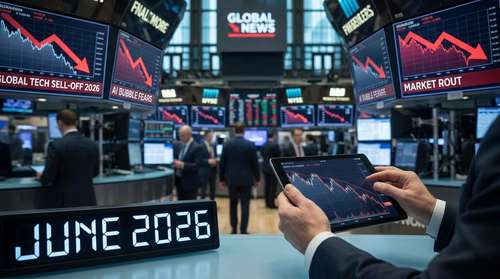
The intersection of a historic Brent crude record high and a hawkish pivot from the Federal Reserve has triggered severe stock market volatility March 2026. Wall Street has been forced to rapidly recalibrate valuations. While energy titans have seen their market capitalizations surge as investors seek safe havens, broader equities have faced intense downward pressure.
Major indices flirted with correction territory before clawing back marginal gains following Powell's measured tone at Harvard. Yet, the underlying fragility remains palpable.
Private Credit and Bond Market Reactions
Beyond traditional equities, the stock market volatility March 2026 has exposed vulnerabilities in alternative asset classes. During his Harvard remarks, Chair Powell specifically highlighted the $3 trillion private credit sector. While he noted that the current shake-up does not currently exhibit the makings of a systemic banking crisis, the combination of rising defaults and restricted capital flows warrants careful observation. In the bond market, Treasury yields have fluctuated wildly; the 10-year yield briefly spiked above 4.4% before slightly easing as Powell effectively ruled out immediate rate hikes. These credit market jitters underscore just how sensitive the financial system remains to the ongoing Strait of Hormuz energy crisis.
As we move deeper into the spring, the trajectory of the global economy hinges squarely on the geopolitical theater in the Middle East. Whether the oil price surge 2026 proves to be a transitory shock or the catalyst for sustained stagflation will depend entirely on how swiftly the world's most critical energy artery can be reopened. Until then, both the Federal Reserve and the American consumer remain on high alert.