
As financial markets opened on April 14, 2026, global investors immediately zeroed in on the banking sector. The highly anticipated JPMorgan Q1 earnings 2026 report has officially arrived, bringing with it a clearer picture of corporate health in an increasingly complex macroeconomic environment. With Citigroup and Wells Fargo also opening their books, the S&P 500 earnings kickoff sets a definitive tone for the weeks ahead. Investors are actively weighing two distinct macroeconomic forces: the generous corporate benefits rolling out from the 'One Big Beautiful Bill Act' (OBBBA) and the persistent friction of climbing global energy prices.
High Expectations for Big Bank Earnings Today
With big bank earnings today dictating market momentum, Wall Street analysts are aggressively crunching the numbers to determine if the sector can sustain its recent performance. JPMorgan Chase, acting as the ultimate economic bellwether, was widely expected to post robust earnings per share (EPS) hovering around $5.45 to $5.50, alongside estimated revenues approaching $48.8 billion.
While the banking giant boasts a formidable streak of beating Wall Street projections, the structural environment has shifted. Net Interest Income (NII)—which ballooned during the rate-hike era—is showing concrete signs of plateauing as the Federal Reserve holds its neutral target range of 3.50% to 3.75%. To compensate for the narrowing spread, lenders are pivoting aggressively back to their strategic advisory roots.
Peers are facing their own unique hurdles. Citigroup, riding the momentum of its massive corporate restructuring under CEO Jane Fraser, is anticipated to reveal a significant year-over-year earnings jump, aided by easy historical comparisons and newfound operational efficiencies targeting a 60% efficiency ratio. Wells Fargo, meanwhile, serves as the ultimate "prove it" story; having finally shed its restrictive asset cap, the institution needs to demonstrate definitive loan growth to satisfy demanding shareholders.
OBBBA Tax Reforms Meet Geopolitical Energy Shocks
The macroeconomic push-and-pull defining this Wall Street reporting season is largely unprecedented. On one side of the ledger, the implementation of the OBBBA, signed into law last July, is turbocharging corporate profitability. By reviving critical components like research and development expensing and bonus depreciation, the legislation provides a powerful tailwind for commercial clients. Additionally, the expanded $40,000 State and Local Tax (SALT) deduction cap is acting as a substantial relief valve for consumer spending.
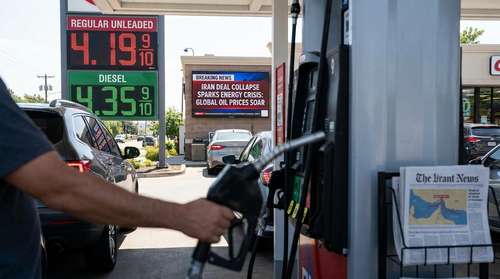
Conversely, bank profit margins April 2026 are being actively tested by severe supply-side shocks. With geopolitical tensions in the Middle East heavily threatening shipping lanes, Brent crude is aggressively pushing toward the $100-per-barrel mark. This energy-driven inflation forces financial institutions to thread a delicate needle, potentially increasing loan loss provisions to protect against corporate defaults while simultaneously chasing new growth avenues.
Consumer Resilience and Credit Health
Beyond high-finance dealmaking, today's disclosures offer a crucial window into the everyday American wallet. Expanded child tax credits, alongside the newly accessible 'Trump Accounts' for minors introduced by the OBBBA, have injected fresh liquidity into household budgets. However, banking executives remain hyper-vigilant. As everyday consumer costs rise due to crude oil's aggressive march upward, credit card balances are testing new highs. Analysts are closely tracking whether the nation's largest lenders are increasing their protective reserves to cover potential upticks in late payment metrics.
Unpacking JPM Stock Results 2026
The market braced for elevated volatility surrounding the JPM stock results 2026 data drop. Options traders have been pricing in a post-earnings swing of nearly 3.9% in either direction—noticeably higher than the bank's historical average of 2.71% over the past four quarters. Investors remain acutely focused on CEO Jamie Dimon's forward guidance, specifically concerning the massive capital expenditures required for artificial intelligence infrastructure and growing private credit exposure. If the leadership team strikes a cautious tone regarding sticky inflation, markets may temper their enthusiasm despite an underlying top-line revenue beat.
The Return of the Investment Banking Fee Machine
With interest rate spreads normalizing, the battleground for banking dominance has firmly moved back to mergers and acquisitions. Corporate boardrooms, flush with the OBBBA's tax incentives and sitting on massive piles of private equity dry powder, are finally deploying capital. This long-awaited thaw in the deal-making winter is reigniting the investment banking fee machine, creating a lucrative buffer against stagnating traditional lending revenue.
Navigating the Broader Financial Sector Outlook
As the dust settles on today's disclosures, the overarching financial sector outlook remains cautiously optimistic but highly bifurcated. The banks that successfully leverage AI trading innovations while managing credit risk linked to the volatile energy sector will likely command premium valuations throughout the remainder of the year.
Moving forward, institutional investors must continuously weigh the stimulative effects of Washington's sweeping tax cuts against the inflationary pressure of global oil markets. If these early April reports are any indication, the remainder of 2026 will be defined not just by how much capital these mega-banks hold in reserve, but by how strategically they deploy it across a rapidly shifting global landscape.