Vice President JD Vance has touched down in Pakistan for a critical diplomatic intervention aimed at resolving the devastating six-week war with Tehran. The highly anticipated JD Vance Iran talks come at a defining moment for the global economy, as a fragile two-week truce hangs in the balance. With international oil prices surging and vital shipping lanes completely paralyzed, the urgency of this weekend's emergency summit cannot be overstated. The world is watching to see if Washington and Tehran can find a way out of a conflict that has threatened to engulf the entire region.
The High-Stakes Islamabad Diplomatic Mission
Stepping off Air Force Two on Saturday morning, Vance was greeted by a Pakistani honor guard, alongside Deputy Prime Minister Ishaq Dar and Chief of Army Staff Asim Munir. The vice president is leading a heavyweight American delegation that includes U.S. Special Envoy Steve Witkoff and Jared Kushner. Together, they are preparing for intense indirect or potentially direct meetings facilitated by Pakistani Prime Minister Shehbaz Sharif.
This Islamabad diplomatic mission is historically significant. It marks the highest-level direct engagement between the United States and Iran since the 1979 Islamic Revolution. Brokering a permanent US Iran ceasefire 2026 is an incredibly complex undertaking. The war, which erupted on February 28 following massive U.S. and Israeli airstrikes, has already claimed thousands of lives across Iran, Lebanon, and Israel.
Before departing Washington, Vance set a firm but pragmatic tone. He cautioned the Iranian delegation against attempting to "play" the United States, warning that the negotiating team would be unreceptive to stalling tactics. At the same time, he echoed the president's sentiment, noting that if Tehran engages in genuine good faith, Washington is ready to "extend the open hand".
Breaking the Strait of Hormuz Blockade
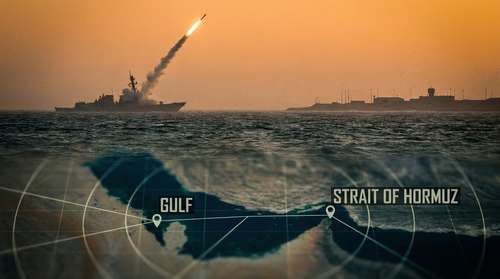
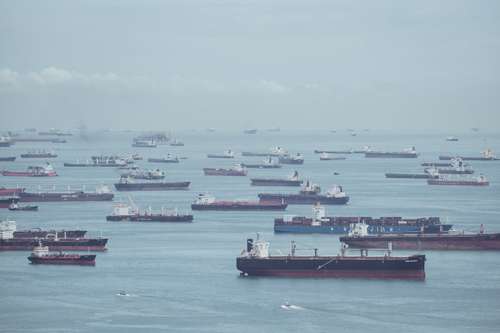
The immediate catalyst pushing both sides to the negotiating table is the catastrophic economic fallout stemming from the Strait of Hormuz blockade. For nearly six weeks, Iran's Islamic Revolutionary Guard Corps (IRGC) has maintained a stranglehold over the vital maritime chokepoint. Because roughly 20 percent of the world's daily oil supply passes through this narrow waterway, the disruption has sent shockwaves through global energy markets.
Tehran achieved this closure without needing a massive naval presence. By launching a limited number of high-visibility strikes and broadcasting strict warnings over maritime radio channels, the Iranian military created an environment of extreme risk. This prompted leading marine insurers to cancel war-risk coverage for the region. Without insurance, shipping companies simply cannot meet the compliance requirements set by charterers and port authorities.
Today, fewer than a half-dozen ships are permitted to transit the strait daily, and only under strict Iranian supervision. The resulting bottleneck has driven certain crude grades to nearly $150 a barrel, leaving thousands of seafarers stranded in the Persian Gulf and forcing global shipping conglomerates to reroute their massive fleets around Africa's Cape of Good Hope.
Iran's Demands and Ceasefire Fragility
Navigating the complexities of Middle East peace mediation requires addressing deep-seated grievances on both sides. The Iranian delegation, spearheaded by Parliament Speaker Mohammad Bagher Ghalibaf and Foreign Minister Abbas Araghchi, arrived in Pakistan with strict preconditions. Tehran insists that the temporary truce agreed upon earlier this week must definitively include a halt to Israel's ongoing military campaign in Lebanon.
Furthermore, Iranian negotiators are demanding the immediate release of frozen national assets before direct talks can commence. The situation on the ground remains volatile. Despite the declared pause in direct U.S.-Iran hostilities, regional skirmishes continue, threatening to derail the delicate progress made by Pakistani mediators.
A Critical Test for Trump Administration Foreign Policy
For Vice President Vance, this weekend's assignment is being described by Washington insiders as a political "poisoned chalice". Long recognized for his staunch advocacy of the America First strategy, Vance built much of his political identity on a vocal skepticism of foreign military entanglements. Now, he finds himself at the absolute center of the largest U.S. military intervention in the region since the Iraq War.
This summit represents a defining test for Trump administration foreign policy. The president has tasked Vance, arguably the administration's most reluctant warrior, with securing a diplomatic exit strategy. The strategy aims to achieve core security goals while simultaneously reopening global trade routes.
Mounting Global Pressure
International stakeholders are leaning heavily on the U.S. and Iran to find common ground. European and Asian economies, heavily reliant on Middle Eastern energy exports, are facing crippling inflation spikes as supply chains fracture. Allied nations have quietly expressed frustration with the prolonged closure of the strait, emphasizing that a protracted military standoff serves no one's interests. The sheer magnitude of the global disruption ensures that the negotiators in Pakistan have zero margin for error.
If Vance manages to secure a durable agreement and end the economic bleeding caused by the blocked strait, he will cement his reputation as a formidable statesman. Success in Islamabad would significantly bolster his credentials ahead of a presumed 2028 presidential campaign. Conversely, if the talks collapse and fighting resumes, Vance risks being tied to an open-ended, highly unpopular conflict that directly contradicts his foundational political brand. The coming days in Pakistan will determine not just the immediate security of the Middle East, but the future trajectory of American leadership on the world stage.