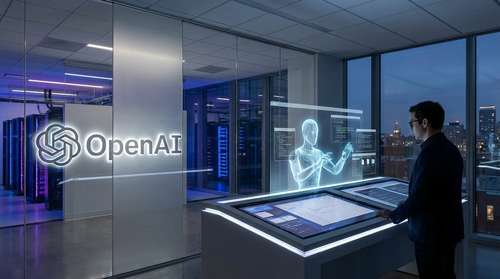
Over the weekend of April 11 and 12, 2026, the technology sector witnessed a fundamental shift in computing. Following its highly anticipated initial rollout, OpenAI GPT-5.4 has officially matured into widespread availability, bringing with it a capability that transforms how machines interact with digital environments. We are no longer merely chatting with algorithms; we are delegating complex desktop work to fully autonomous AI agents. The introduction of native computer use AI means the model can now navigate software interfaces visually—clicking, scrolling, and typing exactly as a human does.
What Are the Key GPT-5.4 Features?
The standout capability of this latest frontier model is its built-in computer use functionality. Unlike traditional automation tools that require rigid API connections or bespoke integrations for every application, OpenAI software automation happens directly through graphical user interfaces. You can present the system with a screenshot, state a goal in natural language, and watch it execute a seamless build-run-verify-fix loop.
Several vital upgrades separate this launch from its predecessors:
- Cross-Application Navigation: The AI seamlessly moves between web browsers, local terminal windows, and desktop applications without requiring custom coding.
- Unmatched OSWorld Dominance: On the OSWorld-Verified benchmark—a rigorous test of desktop automation—OpenAI GPT-5.4 achieved a 75% success rate, officially surpassing the human expert baseline of 72.4%.
- Fewer Hallucinations: Technical evaluations confirm a 33% reduction in factual errors compared to previous iterations.
For developers and enterprise businesses, the user interface itself has essentially become the API, eliminating the need for specialized backend connectors.
Unlocking Unprecedented AI Agentic Workflows
The implications for modern knowledge work are profound. Real-world testing evaluated across 44 professional occupations via the GDPval benchmark reveals that the model matches or exceeds industry professionals 83% of the time. This massive leap covers everything from constructing financial spreadsheets and managing urgent care schedules to developing polished frontend code and intricate presentations.
To support these robust AI agentic workflows, the architecture features a massive 1.05-million token context window. This allows the agent to ingest and reason across entire codebases or hundreds of document files simultaneously without losing critical details. For tasks demanding lower latency and high volume, the ecosystem now includes GPT-5.4 mini and nano, offering optimized alternatives at a fraction of the cost—bringing standard input pricing down to just $0.75 per million tokens for the mini variant.
The 13-Hour Autonomy Horizon
The most striking benchmark to emerge over the past 48 hours is a new metric regarding continuous operation. Independent safety evaluations published over the weekend by METR revealed that the model achieves a state-of-the-art 13-hour autonomy horizon when executing complex, unsupervised tasks. A system capable of operating independently for more than half a day represents a monumental leap forward.
This endurance changes the fundamental definition of a digital worker. A 13-hour autonomous window means the agent can identify a network issue, research solutions, write the necessary code, test the software, and deploy the fix entirely on its own. The system handles long-running trajectories efficiently, actively asking the user to take over only when sensitive actions like handling payments or solving CAPTCHAs arise.
The Ecosystem Shift: Retiring Legacy Models
With this weekend's aggressive integration into production systems, OpenAI is also clearing house. Older iterations are rapidly being phased out to make way for the new paradigm. As of mid-2026, GPT-5.2 Thinking is on track for retirement by June 5, while the specialized GPT-5.3-Codex has been entirely absorbed into the standard GPT-5.4 framework. You no longer need to choose between a coding specialist and a reasoning specialist—this unified model handles both flawlessly.
Furthermore, enterprise cloud providers are embracing the shift. Microsoft Azure has already integrated these capabilities under its Computer Use offerings, allowing seamless dynamic adaptation to UI changes directly across web-based and desktop applications.
Security and the Future of Artificial Intelligence
As we deploy systems capable of sustained, independent action, the security landscape must adapt rapidly. The future of artificial intelligence centers on managing autonomous digital actors. A continuous operational window effectively acts as a tireless digital employee—or, if deployed maliciously, an entry-level pentester that never sleeps. This reality has prompted the White House and top financial institutions to urgently vet the cyber implications of these models.
OpenAI has implemented strong guardrails to manage this transition. The native computer-use loop is strictly monitored, and the API introduces a new Deferred Tool Loading feature to improve search accuracy and drastically cut token costs for complex environments. Running efficiently at $2.50 per million input tokens, the standard model democratizes access to elite automation.
The release of OpenAI GPT-5.4 signals that AI is transitioning from a standalone product feature into the underlying plumbing of the digital economy. By merging frontier coding capabilities, deep research skills, and native desktop navigation into a single unified architecture, the era of fully autonomous AI agents has decisively begun.