The tech world is witnessing a seismic shift as billionaire Elon Musk unveils 'Macrohard', a highly anticipated joint venture merging the computational muscle of Tesla with the reasoning engine of his artificial intelligence startup, xAI. Announced on March 11, 2026, this strategic Tesla xAI partnership centers on a groundbreaking platform dubbed "Digital Optimus." Designed to completely automate complex computer-based enterprise workflows, the system represents a direct challenge to established tech behemoths. By integrating deep neural network capabilities directly into Tesla's existing vehicle hardware, Musk's latest initiative attempts to create a unified ecosystem capable of performing the digital tasks of an entire company.
The Brains and Brawn of Digital Optimus AI
At the core of the Macrohard initiative is the Digital Optimus AI, a dual-process system explicitly modeled after Daniel Kahneman's psychological framework of System 1 and System 2 thinking. During the project's reveal on X, Musk explained that the platform pairs two distinct cognitive layers to achieve autonomous digital execution.
On one side sits xAI's large language model, Grok, which functions as the system's "System 2" brain. Grok acts as the master navigator, handling high-level reasoning, strategic planning, and overall comprehension of a given workflow. On the other side is the "System 1" component: a specialized Tesla-built AI agent that actively processes the past five seconds of real-time computer screen video, alongside keyboard and mouse inputs.
By breaking down tasks into instinct and reason, the platform mimics human operational behavior. This allows the agent to navigate highly dynamic digital environments without breaking down when it encounters an unfamiliar interface. Whether it involves reconciling accounting spreadsheets, drafting emails, or managing human resources workflows, the system is built to execute tedious enterprise tasks with unprecedented speed.
Musk vs Microsoft Rivalry: Emulating Entire Companies
The name "Macrohard" is a deliberate, tongue-in-cheek provocation signaling a new chapter in the Musk vs Microsoft rivalry. While Microsoft has firmly entrenched itself in enterprise operations through its Office suite, Azure cloud services, and deep OpenAI partnership, Musk's alternative takes an entirely different architectural route.
Instead of relying solely on massive, centralized corporate data centers, the Macrohard ecosystem taps into decentralized edge computing. The system is designed to run competitively on Tesla's highly efficient, in-house AI4 chip—a piece of hardware costing roughly $650. By combining the low-cost compute of parked Tesla vehicles with frugal pinging of xAI's expensive Nvidia-based cloud servers, Musk believes he can undercut the current software establishment. He confidently declared that the system is capable of emulating the function of entire companies, setting a bold new benchmark for the future of generative AI.
Navigating the xAI Co-Founder Exodus 2026
Despite the ambitious technological roadmap, the enterprise faces significant internal turbulence. The launch of Macrohard arrives amid the widely publicized xAI co-founder exodus 2026. Over the past few weeks, the startup has experienced a severe brain drain, with crucial talent rushing for the exits following xAI's recent $1.25 trillion all-stock merger with SpaceX.
In mid-February, key co-founders Yuhuai "Tony" Wu and Jimmy Ba resigned, citing a desire to pursue new chapters. This week, the bleeding continued as Zihang Dai departed, and reports indicate Guodong Zhang is expected to follow shortly. The exodus aligns with a period of intense corporate restructuring as Musk aims to launch orbital data centers. However, the departure of engineers like Ba—who reported directly to Musk and managed a vast team of AI researchers—leaves a massive leadership vacuum. Once these latest exits finalize, only two of the original eleven engineers who launched xAI alongside Musk in 2023 will remain.
A Sweeping Tesla AI Robotics Update
For consumers and investors, the Macrohard announcement also serves as a critical Tesla AI robotics update. Historically viewed strictly as a clean energy and automotive manufacturer, Tesla is rapidly repositioning its vehicles as idle compute nodes. Musk expects the new digital agent to be available for early access in approximately six months, compatible with millions of AI4-equipped vehicles already on the road. Imagine pulling your Cybertruck into your garage for the evening, plugging it in, and letting its onboard computer process your small business's payroll while you sleep.
Legal Hurdles and the Road Ahead
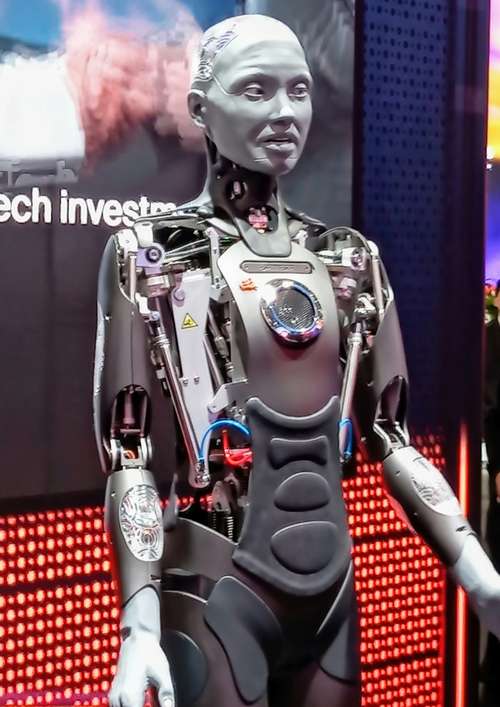
The implications for the broader tech hardware market cannot be overstated. By transforming personal vehicles into distributed AI servers, Tesla effectively bypasses the traditional constraints of scaling server farms. Furthermore, this digital foundation lays the groundwork for the physical Optimus humanoid robot. Eventually, the digital and physical realms are expected to merge: the physical Optimus will handle manual labor, while the digital counterpart handles the backend clerical duties.
However, this growing synergy has intensified a fierce legal battle. Tesla shareholders previously filed a breach of fiduciary duty lawsuit against Musk, alleging he illegally diverted talent and hardware from Tesla to his private ventures. With Tesla now funneling a massive $2 billion investment back into xAI to access technology that arguably could have been developed in-house, the courtroom drama is only likely to escalate. As Macrohard moves toward deployment, the tech industry is left watching to see if Musk's aggressive decentralized architecture can truly dismantle the traditional software monopoly.