Vice President JD Vance has officially arrived in Islamabad to lead a high-stakes diplomatic mission, initiating the critical JD Vance Pakistan talks aimed at preventing a full-scale regional war. With the Iran ceasefire deadline 2026 rapidly approaching its expiration, the U.S. delegation faces immense pressure to secure a lasting agreement. The diplomatic urgency follows a dramatic weekend escalation, punctuated by a U.S. Navy ship seizure of an Iranian vessel in the Gulf of Oman, a move that has sent shockwaves through international markets and triggered a global oil price surge. For readers following the latest Middle East conflict updates, these next 48 hours could determine whether the region steps back from the brink or plunges into an unprecedented military confrontation.
U.S. Navy Ship Seizure Escalates Gulf Tensions
The backdrop for these emergency talks could not be more volatile. On Sunday, U.S. forces enforced their naval blockade by firing upon and boarding the M/V Touska, a massive 900-foot Iranian-flagged cargo ship. The vessel, which is nearly the size of an aircraft carrier, was targeted after it attempted to breach the blockade in the strategic waters of the Arabian Sea and Gulf of Oman.
The M/V Touska Incident
According to U.S. Central Command, the guided-missile destroyer USS Spruance intercepted the vessel as it attempted to transit toward the Iranian port of Bandar Abbas. After the crew ignored repeated warnings over a six-hour period, the USS Spruance fired its 5-inch MK 45 gun into the ship's engine room, effectively disabling its propulsion. U.S. Marines from the 31st Marine Expeditionary Unit then rappelled onto the deck from helicopters to seize control of the ship.
Officials in Tehran immediately condemned the operation as ‘armed piracy’ and vowed swift retaliation against U.S. forces. Iran's Khatam al-Anbiya Central Headquarters issued a stark warning, though they claimed their forces refrained from immediate engagement due to the presence of crew members' families aboard the seized ship. This dangerous maritime flashpoint underscores the fragility of the current two-week truce and highlights the immense challenges facing negotiators.
A Last-Ditch Effort: Islamabad Peace Negotiations
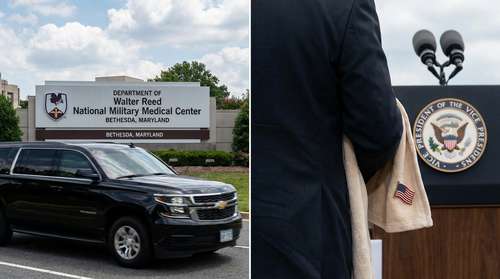
Initially, the White House sent mixed signals regarding Vance's participation, with President Donald Trump citing Secret Service security concerns given the less than 24-hour notice. However, the urgency of the situation forced a rapid reversal. Vice President Vance is now on the ground alongside Special Envoy Steve Witkoff and adviser Jared Kushner to lead the Islamabad peace negotiations.
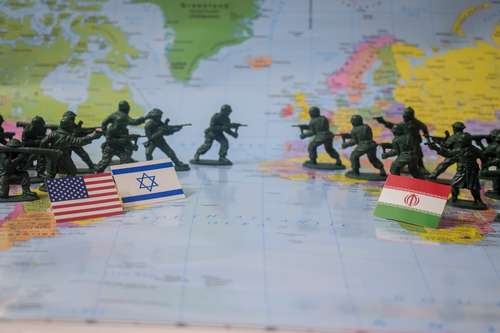
Pakistan, which brokered the initial April 8 truce, is acting as the primary mediator in these indirect discussions. Negotiators are desperately trying to bridge the gap between Washington's demands for the dismantling of Iran's nuclear enrichment facilities and Tehran's insistence on the immediate lifting of the U.S. naval blockade and economic sanctions. A previous marathon session led by Vance ended without an agreement, with the Vice President noting that Iran had rejected American terms. With Iran's leadership heavily scrutinizing the proceedings, achieving a breakthrough before the truce expires will require monumental diplomatic maneuvering.
Trump Iran Military Policy: Last Chance for Peace
Looming over the negotiating table is the uncompromising nature of Trump Iran military policy. President Trump has made it unequivocally clear that Washington will not accept prolonged diplomatic stalling. In a series of weekend statements, the President warned that if a fair deal is not reached, the U.S. military is prepared to launch devastating strikes.
‘If they don't, the United States is going to knock out every single Power Plant, and every single Bridge, in Iran,’ Trump stated, calling it a total end to the ‘killing machine’. This maximum pressure doctrine leaves very little room for error. The administration views the current JD Vance Pakistan talks not as the beginning of a prolonged dialogue, but as a final ultimatum. If Tehran refuses to comply with the proposed framework, the U.S. is prepared to transition from a naval blockade to direct kinetic strikes.
Economic Fallout: Global Oil Price Surge
The geopolitical instability has immediately spilled over into the global economy. As the Strait of Hormuz—a critical chokepoint for roughly a fifth of the world's daily oil shipments—remains heavily restricted by the U.S. blockade and Iranian military posturing, markets have reacted violently.
The ensuing global oil price surge threatens to disrupt supply chains and inflate energy costs worldwide. International shipping companies are already rerouting vessels or halting operations in the Arabian Sea altogether, adding exorbitant freight costs that will ultimately be passed down to consumers. Financial analysts warn that if the Iran ceasefire deadline 2026 passes without an extension and the conflict escalates, crude oil prices could eclipse historical highs within days.
As the world watches the Middle East conflict updates unfold, all eyes remain fixed on Islamabad. Vice President Vance's diplomatic mission is a tightrope walk over an active volcano. Whether these emergency meetings yield a historic peace framework or merely serve as the final prelude to a devastating regional war will be decided in the coming hours.