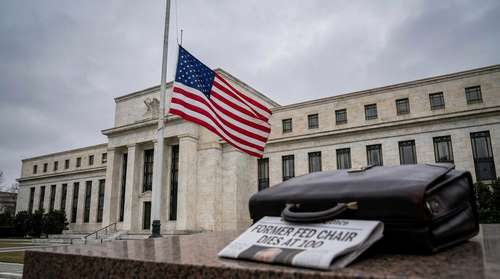
Alan Greenspan, the towering American economist who steered the nation’s monetary policy through two decades of unprecedented booms and devastating busts, has passed away. Alan Greenspan dies at 100 from complications of Parkinson's disease, marking the definitive end of an era for global finance. The news was confirmed on Monday by his wife of nearly thirty years, veteran NBC News correspondent Andrea Mitchell. As Wall Street and Washington react to the news that the former Fed chairman dies, historians and economists are already unpacking his monumental, yet sharply polarizing, Federal Reserve economic legacy.
From Jazz Musician to Economic Powerhouse
Before he became the undisputed architect of modern American capitalism, Greenspan’s life took a remarkably different trajectory. Born on March 6, 1926, in New York City, he was raised in Washington Heights by his mother following his parents' divorce. Demonstrating an early aptitude for both mathematics and the arts, Greenspan initially pursued a career in music. He studied clarinet and saxophone at the Juilliard School and even toured with a prominent swing band in the 1940s.
However, his passion for numbers eventually eclipsed his musical ambitions. He enrolled at New York University, earning his bachelor's and master's degrees in economics before eventually completing his Ph.D. in 1977. During the 1950s, Greenspan formed a pivotal intellectual bond with the polemical novelist Ayn Rand. Becoming a core member of her inner circle, he absorbed her Objectivist philosophy of radical individualism and laissez-faire capitalism. This deep-seated belief that free markets are inherently self-regulating would profoundly shape his future policy decisions in Washington.
The "Maestro" of the U.S. Economy
After serving as chairman of the Council of Economic Advisers under President Gerald Ford, Greenspan was appointed as the 13th Chair of the Federal Reserve by President Ronald Reagan in August 1987. His leadership was tested almost immediately. Just two months into his tenure, the stock market suffered the infamous October 1987 "Black Monday" crash. Greenspan’s swift, decisive action to flood the financial system with liquidity averted a prolonged crisis, earning him the lasting trust of Wall Street.
Over his 18-year tenure, Greenspan was reappointed by Presidents George H.W. Bush, Bill Clinton, and George W. Bush. He presided over the "Great Moderation," a historic period marked by robust growth, low inflation, and booming equity markets. It was during the meteoric rise of the dot-com bubble that he delivered a famously cautious December 1996 speech, questioning aloud whether "irrational exuberance" had unduly escalated asset values. Despite the mild warning, markets continued their upward trajectory, and his reputation as an economic "Maestro" only grew as investors parsed his famously cryptic speeches.
A Complex Federal Reserve Economic Legacy
When Greenspan retired in January 2006, he was universally hailed as an economic genius. Yet, barely two years later, the collapse of the global financial system triggered a fierce reevaluation of his Federal Reserve economic legacy. Critics pointed to his steadfast refusal to regulate the booming derivatives market and his policy of keeping interest rates artificially low in the early 2000s. Many economists now argue that his dogmatic championing of 2008 financial crisis deregulation laid the groundwork for the devastating subprime mortgage bubble that nearly brought down the global banking system.
The 2008 Testimony and "The Flaw"
In October 2008, amid what he called a "once-in-a-century credit tsunami," Greenspan faced the House Oversight Committee. In a stark departure from his lifelong defense of unfettered capitalism, he made a startling admission. When pressed on his deregulatory ideology, Greenspan conceded that he had found a "flaw" in his worldview. He expressed a state of "shocked disbelief" that lending institutions had failed to protect their own shareholders' equity, acknowledging the perilous limits of industry self-regulation.
Life with Andrea Mitchell and Final Years
Despite the controversies surrounding his later career, Greenspan remained a towering figure in Washington society. In 1997, he married Andrea Mitchell, who remained his steadfast partner for nearly three decades. Following the confirmation that the former Fed chairman dies, Mitchell released a poignant statement celebrating his life. She noted that while the world knew him as a data-driven technocrat, he possessed his own personal irrational exuberance for baseball, tennis, and jazz music.
During his final years, Greenspan continued to write, consult, and offer warnings on inflation and government debt through Greenspan Associates LLC, even as his physical health declined due to Parkinson's disease.
As the world processes the news that Alan Greenspan dies at 100, his narrative remains one of the most compelling in American history. He was an intellectual giant who helped shape the modern global economy—a leader whose early triumphs fostered unparalleled prosperity, and whose later miscalculations offer a profound, enduring lesson on the limits of economic ideology.